



Fall is the best time to be outside in Austin. Evenings finally cool off after months of heat, and a fire feature gives you a reason to stay out past dark. But before you pick one, two things make the choice trickier here than a catalog photo suggests: fire rules and burn bans are not the same in every city and county around Austin, and a fire pit and an outdoor fireplace are two different things that suit different yards.
We design and build both. Our fire pit and outdoor fireplace service covers stone, brick, and welded steel, gas or wood. This guide walks through the real decision points so you can choose with confidence.
Is an outdoor fireplace better than a fire pit for an Austin backyard?
Neither is better across the board. They solve different problems.
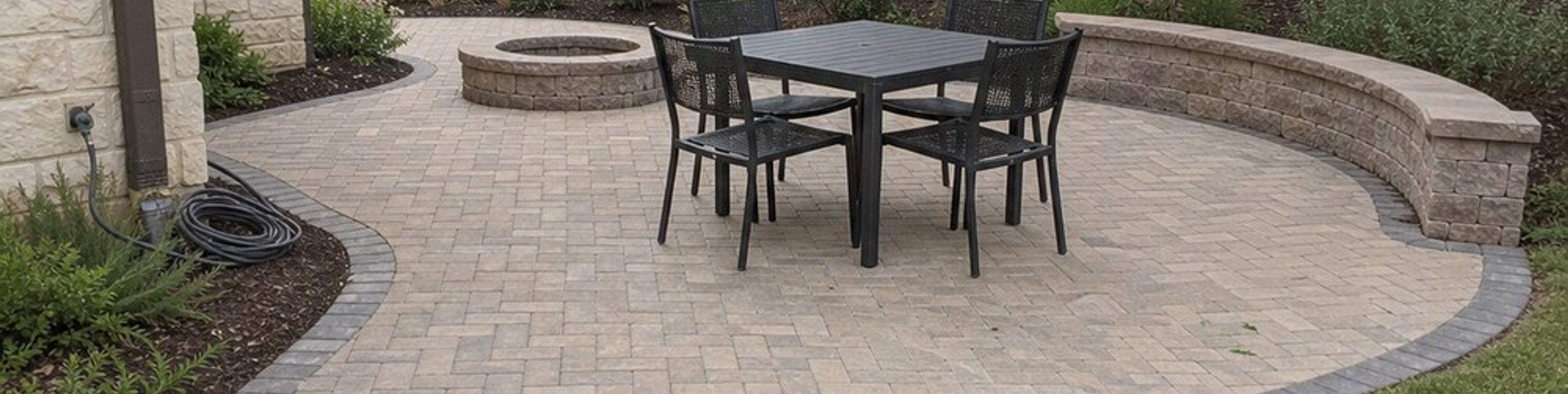
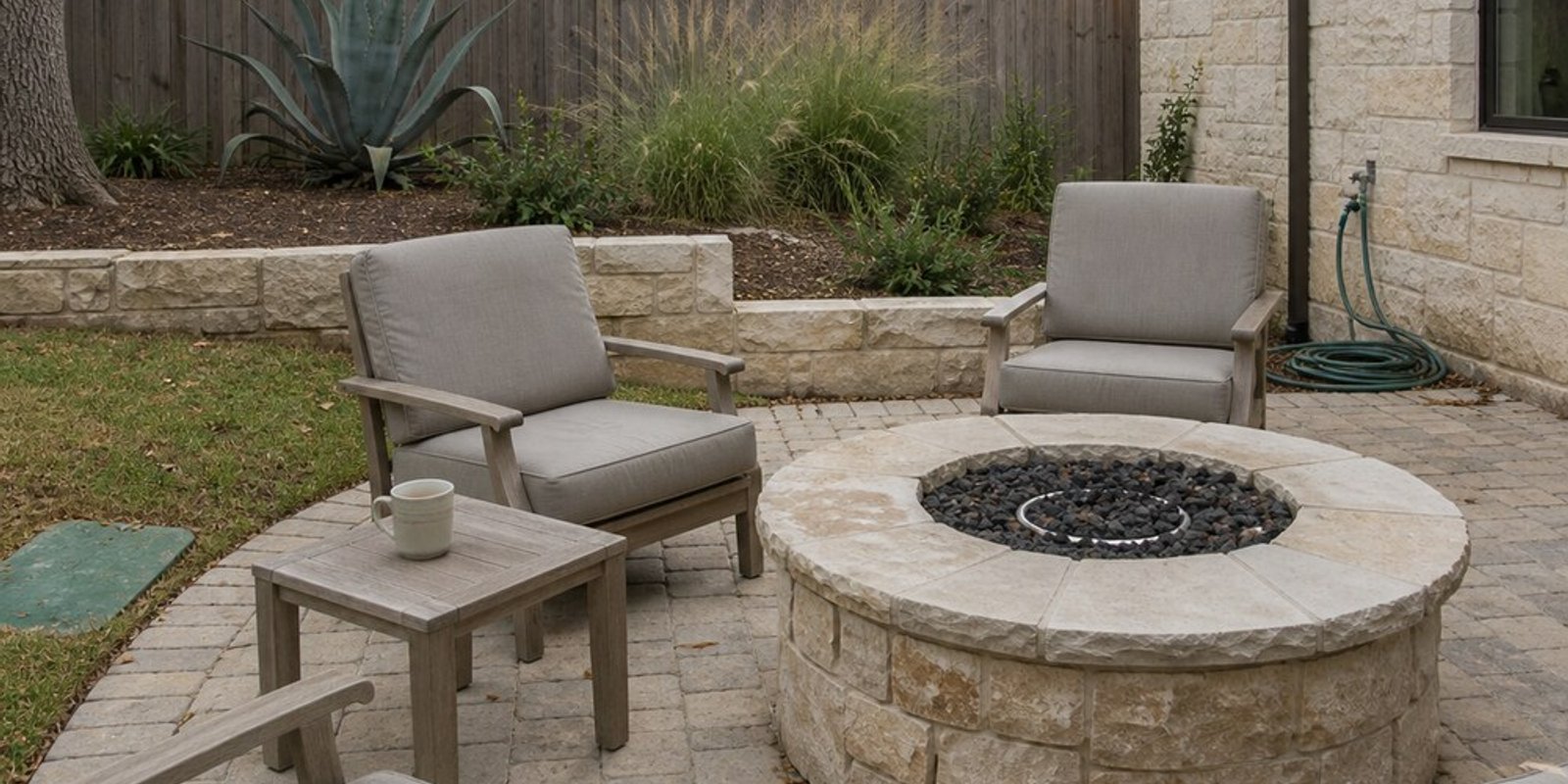
A fire pit puts people in a circle. Everyone faces the flame and each other, which suits casual nights and larger groups. It sits low, keeps sight lines open across the yard, and usually costs less. A round or square pit ringed with seating is the classic Austin patio setup.
An outdoor fireplace is a tall focal point against one edge of the patio. It draws the eye, blocks wind from one direction, adds a little privacy, and pushes smoke up and away through a chimney instead of into faces. It takes more room and more money, and it seats fewer people at once.
So ask what you want the space to do. Gathering and flexibility point to a pit. A dramatic anchor, a wind screen, and vertical presence point to a fireplace.
Can you have a fire pit in Austin, and what happens during a burn ban?
Yes, you can, within the rules. For single-family homes and duplexes, the City of Austin's recreational fire guidelines allow a recreational fire with a fuel area of 3 feet or less in diameter and 2 feet or less in height. The fire must be at least 25 feet from structures and other combustible materials, dry grass and leaves must be cleared for at least 10 feet around it, an adult has to attend it the whole time, and you need a garden hose or a fire extinguisher rated 4-A on hand. Only solid fuels are allowed, and open burning of trash, limbs, and leaves is banned in the city.
The bigger variable is a burn ban. Burn bans are set by county, not the city, and they come and go with drought. A burn ban was in effect in Travis County as of August 11, 2026, and the county lists fire pits in non-designated areas among the banned activities. Exemption language for gas appliances or enclosed devices lives in the specific county order, so read the current order rather than assume. That is why we talk through burn bans with you before you pick a fuel.
Austin's suburbs sit in other counties with their own orders. Dripping Springs is in Hays County. Round Rock, Cedar Park, Georgetown, and Leander are in Williamson County. Our office is in Bastrop County. The Texas A&M Forest Service burn ban map is the fastest way to check your county's current status, and your city may add its own fire code on top.
Should your fire feature burn gas or wood?
This is the decision that shapes the rest.
Wood gives you the crackle, the smell, and real flames. The trade-offs are smoke that follows the wind, flying embers, ash to clean out, and the fact that it is usually the first thing restricted during a burn ban. Around Austin's oak-heavy lots, ember risk is worth taking seriously.
Gas lights with a switch, burns clean, makes no ash, and produces no embers. It is easier to use year round and often stays usable when wood fires are restricted, though that depends on the county order. The catch is the gas line. In Texas, gas piping is licensed plumbing work under the Texas Plumbing License Law, so a licensed plumber runs and connects the gas line for a natural gas feature. Natural gas ties into your home supply and never runs out; propane comes from a tank you refill but needs no line to the house. Either way, if any digging is involved, call 811 first for a free utility locate before anyone breaks ground.
For the most reliable use through dry Central Texas summers, gas is the safer bet. If the campfire experience is the whole point, build for wood and place it carefully.
How far from your house should a fire pit or outdoor fireplace go?
Start with the published clearances and work from there. Under Austin's recreational fire guidelines, a recreational fire must sit at least 25 feet from structures and combustibles, while a portable outdoor fireplace must be at least 15 feet away. A permanently built masonry feature is not a portable unit, so treat 25 feet of clearance from the house and fence line as a safe planning target and confirm the rule that applies to your build with your city.
Gas appliances are a different case. A listed gas fire pit or fireplace follows the manufacturer's stated clearances, which can be tighter, so the installation has to match those instructions.
Do not forget what is overhead. Live oak limbs, a pergola, or a covered patio roof all need clearance above the flame, and a fire under any roof has to be planned from the start with the right height, materials, and venting. If a roofed space is on your list, our guide to pergolas versus covered patios is worth a read before you set the fire feature location.
Where should the fire pit go in your yard, and should it be sunken or raised?
Place it where you will actually sit. Walk the yard on a breezy evening and note which way the wind pushes smoke, because you want it carried away from the house and the main seats, not into them. Line the feature up with a view you like, and give it a clear, level path from the back door so nobody is crossing grass in the dark with a tray.
Build it on a solid base. A paver or stone patio gives the feature a stable, non-combustible footing and ties it into the rest of the space, and a low seating wall around a pit adds permanent seating without crowding the circle. Good landscape lighting on the path and nearby walls keeps the area usable once the fire dies down.
On sunken pits, plan drainage first. Austin's heavy clay soils hold water and our storms drop a lot of rain fast, so an in-ground pit without drainage can collect water and stay wet. A raised pit sheds water and is simpler to keep clean.
Which materials hold up best: limestone, brick, or steel?
All three work here. The choice is about look and upkeep.
Native limestone and stacked stone give the built-in, timeless feel that fits Central Texas homes, and limestone is a local material that matches a lot of Austin exteriors. Brick reads more traditional and pairs cleanly with brick homes. For any masonry feature, what matters most is under the veneer: a fire-rated brick or block core and the right liner so the structure takes repeated heat cycles without cracking. That is how we build our custom stonework fire features.
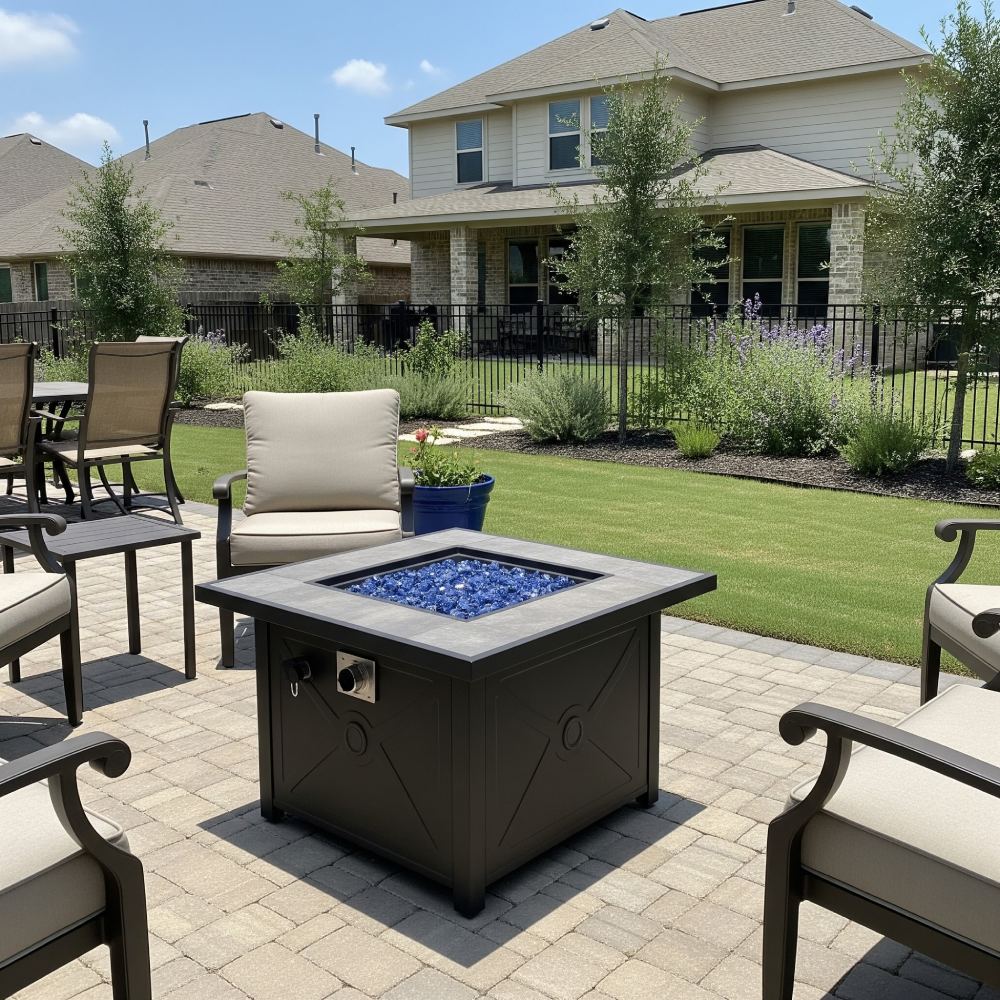
Welded steel is the modern option, and our in-house welding and steel fabrication team builds shapes masonry cannot, from round bowls to clean-lined squares. One honest trade-off: weathering (Corten-style) steel forms a rust-colored patina on purpose, and in the early stages that rust can run off and stain light pavers below it. If that matters to you, plan the placement around it or choose a coated finish.
How much does a fire pit or outdoor fireplace cost, and is it worth it?
Here are national published averages, not our quotes and not verified Austin prices. Use them to set expectations, then get a written estimate for your yard.
For fire pits, LawnLove's 2026 cost guide puts the average for a basic fire pit around $830, with most homeowners spending $250 to $2,200 and custom built-in masonry pits running higher. HomeAdvisor reports a similar $850 average with a $200 to $3,000 range, and lists natural gas pits at $400 to $3,000 because the gas line adds work. Outdoor fireplaces cost more: LawnLove's outdoor fireplace guide shows an average near $3,000 with a wide $1,200 to $21,000 range, and notes that custom stone or brick builds can reach the top of that range.
What moves the number: size, material, whether you run a gas line, the footing, added seating walls, and, for a fireplace, chimney height. Whether it is worth it comes down to use. A feature you sit around most weekends from October into spring earns its place. Ignore online ROI percentages; they vary too much to promise.
Should you buy a kit or hire a pro to build it, and what should the quote include?
A store-bought bowl or a stone ring kit is the cheap, fast route, and for a simple wood pit on an open patch of yard it can be fine. The limits show up with gas lines, real masonry, tricky placement, and anything under a roof, where a mistake gets expensive or unsafe. A built-in feature that ties into your patio and seating is where a design-build approach pays off.
Whoever you hire, a good quote should spell out:
- The footing and base, and how it ties into an existing or new patio
- A fire-rated core and liner, not just a pretty veneer
- The veneer material and finish
- The fuel setup, and specifically who runs the gas line (a licensed plumber for gas piping)
- Clearances from the house, fence, and anything overhead
- A check of permits, your county burn ban rules, and any HOA restrictions
- Drainage, especially for a sunken pit
- How lighting and seating tie in
Ready to plan a fire pit or outdoor fireplace for your Austin home?
The right answer depends on your yard, how you gather, and how you want to use the space through the year. We design and build fire pits and outdoor fireplaces for Austin homeowners, and a 3D rendering lets you see the feature in place before we build. Contact 512 Luxury Landscape Design for a design consultation, and we will talk through fuel, placement, materials, and the local rules that apply to your property.