



Retaining Walls in Austin, TX
Hill Country lots are full of slopes, and slopes mean erosion. A well-built retaining wall holds back soil, creates level space, and protects your property from washouts. We build stone and block retaining walls across Austin and Central Texas with the drainage and footings they need to last.
Schedule An Estimate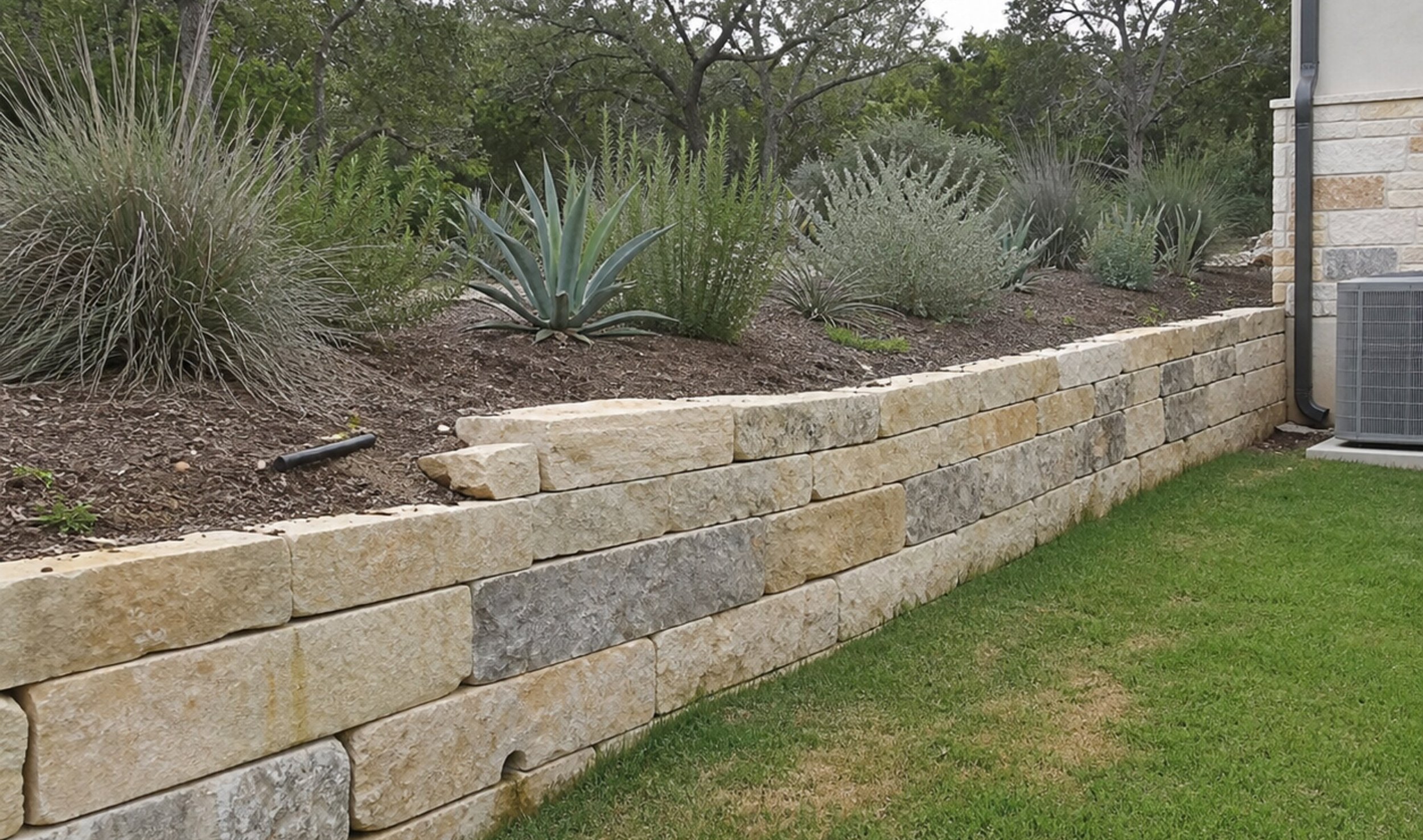
Stone & Block Walls That Hold the Hill
On a sloped Austin lot, soil moves downhill every time it rains. A retaining wall stops that movement, turns a steep grade into usable yard, and keeps mud and runoff away from your home. Built from natural stone or interlocking block, a good wall is both a working structure and a handsome feature.
The real work happens behind the wall. Footings, backfill, and a hidden drainage system are what keep a wall standing for decades. We build every retaining wall with those details in mind, so yours stays strong through our wet springs and dry summers.
Our Customer Reviews
- Amelia Johnson Google review ·Read on Google: review by Amelia Johnson (opens in a new tab)
I couldn’t be happier with the work 512 Luxury Landscape Design did on my backyard. They designed a stunning outdoor living area complete with a fire pit, custom stonework, and gorgeous plant selections. The attention to detail was impeccable, and the team worked efficiently to bring my vision to life. Now, my family and I spend more time outside than ever before, and entertaining guests has never been more enjoyable. Highly recommend their services for anyone looking to elevate their outdoor space!
- Michael Williams Google review ·Read on Google: review by Michael Williams (opens in a new tab)
It was great working with Ean to remove our grass and replace with a xeriscape design. He took my vision and some specific plant selections and came up with a design that accomplished exactly what I wanted. I would recommend him and his team for your landscape needs!
- Adan Vasquez Google review ·Read on Google: review by Adan Vasquez (opens in a new tab)
enjoy working with Ean and his crew, always easy to communicate with.
- Anna Valenzuela Google review ·Read on Google: review by Anna Valenzuela (opens in a new tab)
Very pleased with how the driveway came out. Definitely recommend this company.
- Terry Kelley Google review ·Read on Google: review by Terry Kelley (opens in a new tab)
We had Ean and crew add an extension to our driveway and reroute sprinklers. The work was slows down by city permits issues but they were very patient with that and finished soon after permits were approved. Very happy with the work. Would use them again in a second.
- Karima King Google review ·Read on Google: review by Karima King (opens in a new tab)
We are very happy with the project/ service Ian and his team provided to us. Great communication, timely and very respectful. Would recommend 100 times! Thanks Ian and team!
- John Bitner Google review ·Read on Google: review by John Bitner (opens in a new tab)
Ean and his crew were great to work with. Newly poured driveway included a beautiful glued rock drain which not only protects but adds a touch of color to the concrete. Would highly recommend 512 Luxury Landscape Design.
- Kim San Miguel Google review ·Read on Google: review by Kim San Miguel (opens in a new tab)
Ian was so easy to work with and really communicative. We had our backyard redone with sod and he found the grass that would work best for our yard and gave us in depth instructions on how to make sure it roots and grows. His team was efficient and they did a fantastic job. We’re so excited to see how it does and would absolutely recommend for anyone looking for landscape design.
- I SanMiguel Google review ·Read on Google: review by I SanMiguel (opens in a new tab)
Ean and his crew were quick, efficient, respectful, and easy to deal with. He gave a fair price for a sod install. He showed up on time, did the work as agreed upfront, and left us with the nice lawn to enjoy. Thanks Ean and crew!
- Skylar Saenz Google review ·Read on Google: review by Skylar Saenz (opens in a new tab)
Ean and the team at 512 Luxury & Design exceeded my expectations. He walked through the project with me, listened to my ideas, and added his own expert input. He then put everything together in a digital format and sent it over for review. When the team arrived, they brought the vision to life flawlessly. I highly recommend Ean and his team for their professionalism, creativity, and attention to detail!
- Kelly Roles Google review ·Read on Google: review by Kelly Roles (opens in a new tab)
512 Luxury landscaping is a solid choice in your landscaping and construction needs! Ean and his crew do impeccable work, kind, timely, and is the best contractor I’ve ever worked with! What sets Ean apart is that he aims to educate the client. I’ve worked with many contractors that just do-as-told and then show up with their crew and you’re in shock, not knowing the process and procedures. Construction and landscaping is much more meticulous, strategic and demands strong communication than the novice knows- until they experience it for the first time. Ean is professional, communicative, has creativity and a best-bang-for-your-buck-attitude. There were times when I needed someone to step in a take control and he knew exactly when to do this- whilst simultaneously balancing knowing that as the customers, we need full transparency of what needs to happen and what to expect. Ean was additionally helpful calling out prior contractors incorrect work. So much to the point where I was empowered with the knowledge he gave me to call-out said contractors to come back and do the job the right way. You can’t go wrong with 512 luxury landscaping. I’ve referred many friends to them and hope this review is helpful to you making your decision on hiring a contractor.
- Virginia Dalbeck Google review ·Read on Google: review by Virginia Dalbeck (opens in a new tab)
I really enjoyed working with Luxery Landscape Design. Super professional, always on time and they get the job done. Also, all things they planted lasted many seasons and don’t die off which was nice… I definitely recommend.
- Pablo Salazar Google review ·Read on Google: review by Pablo Salazar (opens in a new tab)
Ean and his crew did a great job in our backyard renovation. Very friendly, would recommend!
- Norma Miller Google review ·Read on Google: review by Norma Miller (opens in a new tab)
512 Luxury Landscape Design added a patio extension which included a pergola cover. The owner was easy to communicate with, stayed on top of things and did not let the job drag on, and ensured the job was completed to satisfaction. It was a pleasure working with them!
- Stafford Ullrich Google review ·Read on Google: review by Stafford Ullrich (opens in a new tab)
We had a fence and some landscaping done and it came out amazing. The work was completed quickly and they did a great job.
- Dana Gutierrez Google review ·Read on Google: review by Dana Gutierrez (opens in a new tab)
Dream yard realized! These landscape architects are incredible artists; they turned my area into an opulent haven.
- Jack Coffey Google review ·Read on Google: review by Jack Coffey (opens in a new tab)
Several friends referred me to 512 Luxury Landscape Design for my latest home improvement project and we're glad they did. They installed a concrete sidewalk, outdoor wall sconce, and river rock landscape treatment. We think landscaping with rock is great because it cuts down on maintenance of having to add mulch seasonally. Fair pricing, great communication, and creative design ideas is why it was a pleasure working with Ian and his entire team. We highly recommend Luxury Landscape Design the next time you want to elevate your outdoor space.
- Nekeda Boggs Google review ·Read on Google: review by Nekeda Boggs (opens in a new tab)
I looked all over for a reasonable priced gazebo. Had no luck. I was referred to 512 Luxury Landscape and the process went seamlessly. Ean and his team were prompt and did an exceptional job building my gazebo. I absolutely love it.
- Nick Kelly Google review ·Read on Google: review by Nick Kelly (opens in a new tab)
Loved working with 512, local, attention to detail and transparent. Thank you!
- Braxton Peck Google review ·Read on Google: review by Braxton Peck (opens in a new tab)
Have used Ean and his crew for a handful of jobs. Quality work and material , great communication, and professional. Would highly suggest for any landscaping project.
- Jesse DeNucci Google review ·Read on Google: review by Jesse DeNucci (opens in a new tab)
Excellent service and professionalism along with a personal touch neighborly kindness. It says a lot when you can higher a company that takes as much pride in their work as this company. As a business owner myself, its unfortunately too hard to find a company that stands by their work AND their customer. 512 will impress you. Thanks team!
- Yuyu Chen Google review ·Read on Google: review by Yuyu Chen (opens in a new tab)
Had the pleasure of having them modify our home's surrounding, and I must say it was really impressive. If y'all are looking for someone to do landscaping, definitely consider this company.
- J F Google review ·Read on Google: review by J F (opens in a new tab)
Ean is always friendly and informative. Highly recommend. 🌱
- Lacey Kapetanis Google review ·Read on Google: review by Lacey Kapetanis (opens in a new tab)
Great company and great ownership! If you’re looking for a company that is reliable, amazing work ethic / finishing product and personable, you will most definitely want to get in touch with the owner, Ean!
- Jasmin H-C Google review ·Read on Google: review by Jasmin H-C (opens in a new tab)
It has been a pleasure working with Ean. Consultation, design and execution was performed professionally. Communication was flawless and so was the project result. Loved the additional ideas he provided and the result exceeded my expectations. Couldn’t be more happy. Thank you so much!!!!
- Margo Wickersham Google review ·Read on Google: review by Margo Wickersham (opens in a new tab)
Ean Nambo has a great eye for design and practicality that is more important for Austin area homeowners now than ever. We had a functional problem of water pooling at our front door during heavy rains. We had a design problem of a front yard that was 20% grass and 80% weeds that required mowing and turned brown during droughts. I challenged Ean to help me create a xeriscaped front yard that diverts water away from our house and into the street and that looks like the updated and modern home that we've created. I wanted to avoid installing a lawn that would be thirsty for water in our climate and I had some ideas for including a dry creek running through the property. I am thrilled with the results! I love the look and the dry creek bed did its job during a recent deluge. Ean had ideas to make the most of a courtyard area that converted the space into an additional gathering area and I couldn't be happier with the result. He also included dramatic landscape lighting installation that showcases the lovely texture of the limestone exterior and the grace of our live oaks that have survived the recent freezes. I wanted to avoid over planting, so as we planted a few things. I'm happy with this strategy, because I can see which plants work best in which areas for future plantings. Rarely can a homeowner say they are so happy with the results of working with a landscape company, so I am thrilled to share met experience with others considering 512 Luxury Landscaping.


Why Austin Homeowners Choose Us for Retaining Walls
A retaining wall does real structural work, so it needs the right footing and drainage behind it.
Rated 4.8 on Google
28 homeowners have reviewed us on Google, with an average of 4.8 out of 5 stars. Read our Google reviews
Designing and Building Since 2018
One in-house team designs and builds your project, so there is no handoff between a designer and a separate crew. The owner stays involved from the first walk-through to the final cleanup.
Drain Lines and Gravel Backfill on Every Wall
Water pressure behind a wall is what pushes most walls out of plumb. We install gravel backfill and a perforated drain pipe behind every wall to relieve it. Footings go below the active clay zone so the base does not heave, and we walk you through permit needs for taller walls before we build.
Retaining Wall Installation in Austin, TX
STONE AND BLOCK WALLS BUILT FOR HILL COUNTRY SLOPESAt 512 Luxury Landscape Design, we build stone and block retaining walls that protect Austin properties from erosion and make sloped yards usable again. Whether you need a short garden wall to create a planting bed or a taller structure to hold back a steep grade, we engineer each wall for the load it carries. With native stone and proper drainage, your wall does its job while adding lasting beauty to your landscape. As your retaining wall contractor, we handle the whole job ourselves, from the first look at your slope to the final cap.
Our Retaining Wall Construction Process
We begin by studying your slope, soil, and drainage patterns. Then we dig a level trench, set a compacted base, and build the footing that anchors the wall. As we stack each course, we add gravel backfill and a drain line behind the wall to carry water away. This step-by-step approach keeps water pressure from pushing the wall out of place over time.
- Site review of slope, soil, and water flow
- Solid footing and compacted base for stability
- Gravel backfill and hidden drain lines to relieve water pressure
- Stone or block stacked in tight, even courses
- Caps and finishing details for a clean, durable top
Retaining Wall Drainage in Austin
Most retaining wall failures come from water, not weight. When rain soaks the soil behind a wall, that soil gets heavier and pushes harder. The water itself also presses on the back of the wall. If the water has no way out, the pressure keeps building until the wall leans, bulges, or cracks. That is why drainage is the number one thing we plan for on every wall we build in Austin. Here is what goes into a good retaining wall drainage system.
Gravel Backfill
Right behind the wall, we fill with clean, crushed gravel instead of the dirt we dug out. Water runs down through gravel quickly instead of sitting against the wall. The gravel zone gives rain a fast path to the bottom of the wall, where the drain pipe can carry it away.
Perforated Drain Pipe
At the base of the wall, inside the gravel, we lay a perforated drain pipe. Water that reaches the bottom of the gravel enters the pipe through its holes and flows out to a safe spot, like a lower part of the yard or a drain outlet. The pipe has to slope the right way and have somewhere to go. A drain pipe with no outlet just holds water where you do not want it.
Filter Fabric
Filter fabric is a tough cloth that lets water through but holds soil back. We use it to keep the native soil from washing into the gravel. Without it, fine clay slowly fills the spaces between the stones and clogs the pipe. A clogged drain works fine the first year and then quietly stops working.
Weep Holes
Solid walls, like poured concrete or mortared stone, do not let water pass through the face. For those walls, we add weep holes near the bottom. These small openings give trapped water one more way out. Weep holes work best as a backup to gravel and a drain pipe, not as a replacement for them.
Why Clay Soil and Heavy Storms Make Drainage So Important
Much of the Austin area sits on clay soil. Clay holds water and swells when it gets wet, then shrinks as it dries out. That swelling pushes against the back of a wall, and the constant cycle of wet and dry works on it year after year. Central Texas storms can also drop a lot of rain in a short time. When that happens, the soil behind a wall with poor drainage fills with water fast. Clay plus heavy storms is why drainage causes more wall failures here than anything else.
We also look at the water coming from above the wall. We shape the ground so surface water flows around or away from the wall instead of pouring over the top, and we keep gutter downspouts from emptying behind it.
Signs a Retaining Wall Has a Drainage Problem
- The wall is leaning forward or bulging in the middle
- Soil or mud is washing out through the joints or the base
- Water stains, green growth, or standing water at the foot of the wall
- New cracks in a concrete or mortared wall
- The ground behind the wall is sinking or stays soggy long after a rain
If you see any of these, call (512) 785-2754 and we will come out to look at your wall.
Custom Retaining Walls in Stone, Block, and Concrete
Every custom retaining wall we build is sized to your slope, your soil, and the look of your home. Here are the main types we build.
Poured Concrete Retaining Walls
Some lots call for a poured structure or a smooth, modern face. For those jobs, we build reinforced poured concrete and concrete block walls. They get the same care as our stone work. We pour a solid footing below grade, add reinforcement sized for the load, and place gravel backfill with weep holes or drain pipe behind the wall. Footing depth matters most here. We pour footings below the active soil zone, so the wall is not heaved by the same clay movement that cracks slabs.
- Poured concrete walls for a clean, modern face
- Reinforced block walls for strength and flexibility
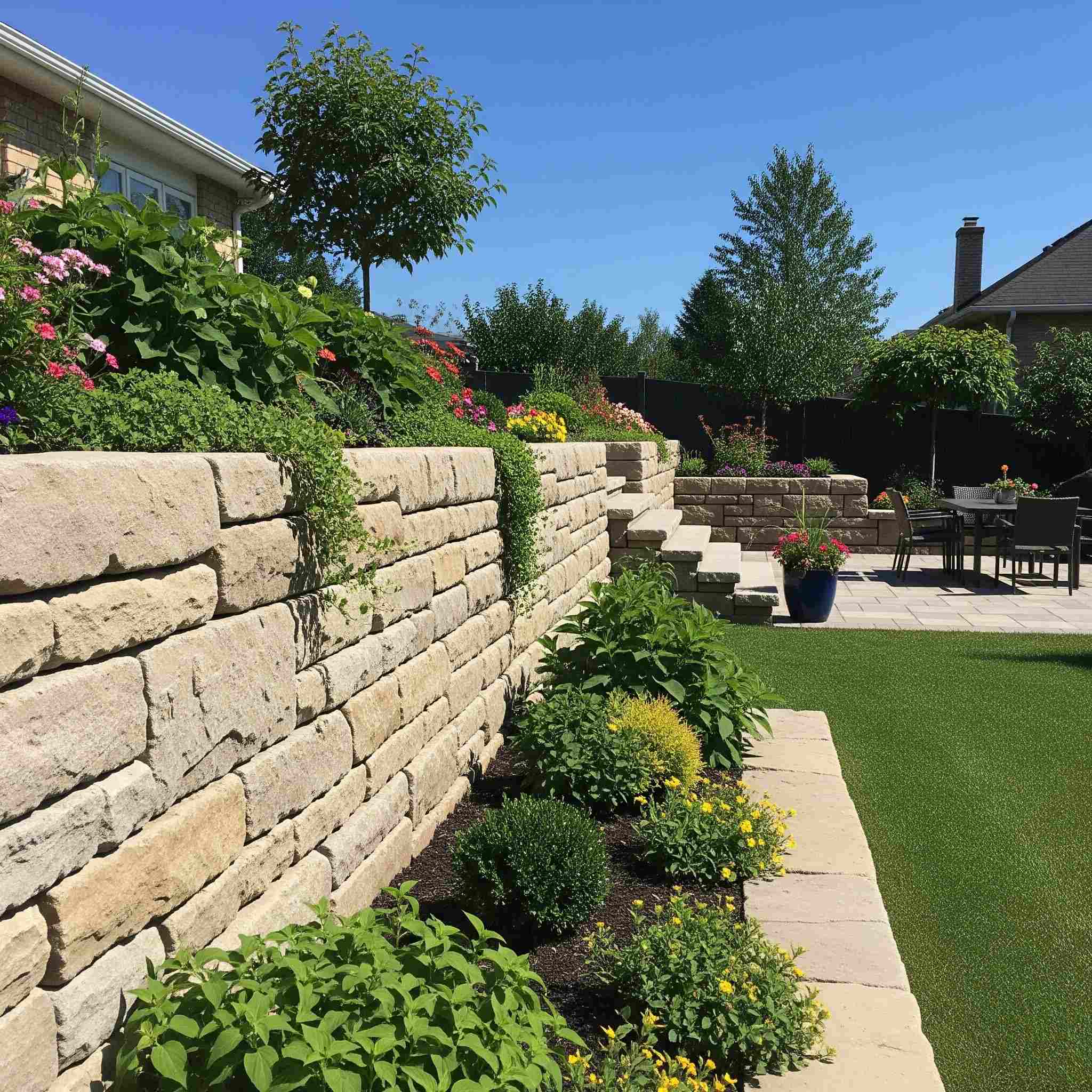
- Terraced walls that break a steep slope into levels
- Stained or stamped facing for a decorative finish
- Built-in steps or seating to make the space more usable
A concrete wall gives you a strong, smooth structure that works well for taller grades and modern designs. Stone and block fit the look of Central Texas homes and flex with the ground. We help you weigh strength, appearance, and cost so you get the wall your lot needs.
Materials and Style Options
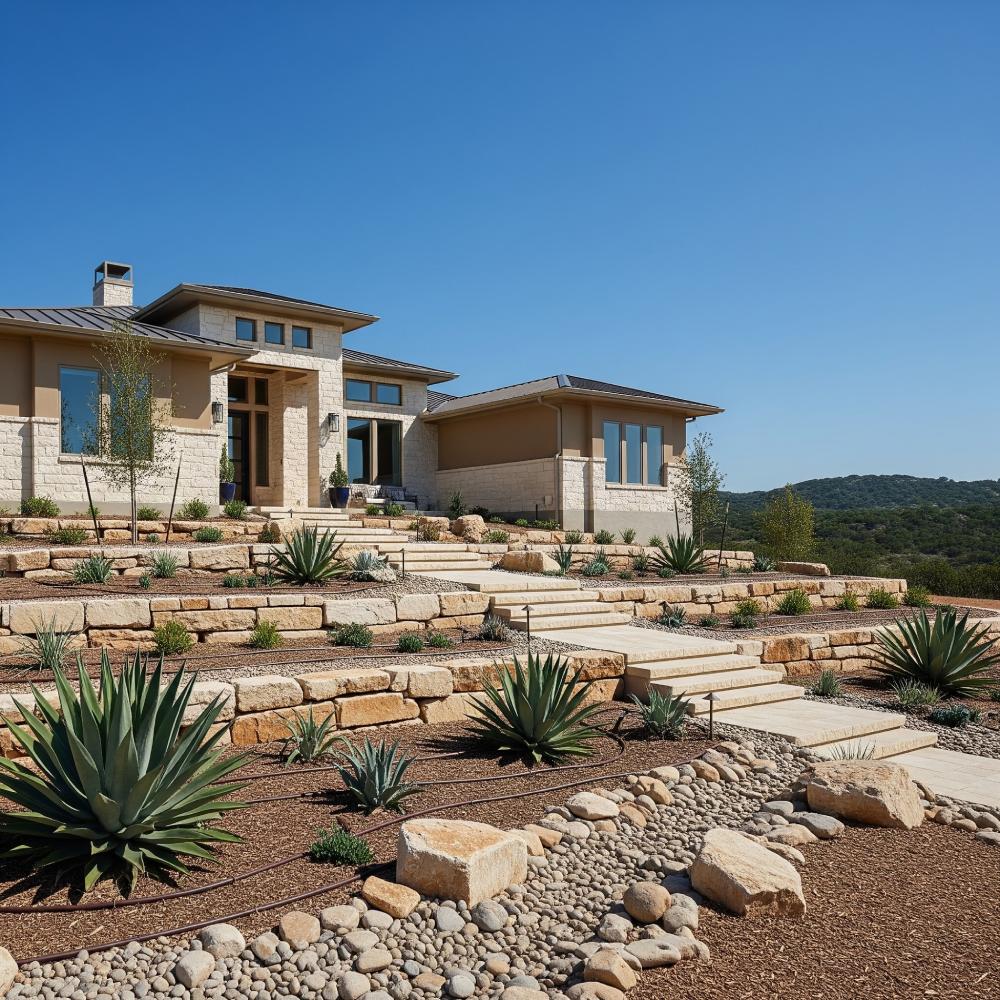
Choose native limestone or stacked stone for a natural Hill Country look, or interlocking concrete block for a uniform, modern finish. Walls can be straight, curved, or terraced into a series of shorter walls that turn a steep slope into garden steps. We can also tie a seating wall or planter into the design so the structure does more than one job.
Seat Walls: Retaining Walls Built to Sit On
A seat wall, also called a seating wall, is a low wall built to a comfortable seat height and topped with a wide capstone. Many seat walls are short retaining walls. They hold back a raised planting bed or the edge of a slope on one side and give you a built-in bench on the other. That gives you extra seating without filling your patio with furniture.
Because a seat wall that holds back soil is still a retaining wall, we build it the same way. It gets a solid footing for our shifting clay, gravel backfill, and drainage behind it. Then we finish the top with a smooth, wide cap that is easy to sit on. We recommend wide, light-colored stone caps because they stay more comfortable to sit on in afternoon heat.
- Seat walls wrapped around a fire pit or fireplace for a built-in gathering circle
- Low walls along the edge of a paver patio that double as a border
- Raised planting beds with a bench-height cap along the front
- Native limestone, stacked stone, or block faced with stone veneer to match your hardscape
Retaining Walls Across the Austin Area
We offer retaining walls for homes across Central Texas, including Lakeway, Spicewood, Dripping Springs, and Rollingwood. See every community we work in on our service areas page.
Planning ahead? Read luxury landscape design trends for Austin homes.
Tired of watching soil wash down your slope? Contact us today to schedule a free consultation for your Austin stone or block retaining wall.
Get Started with Your Wall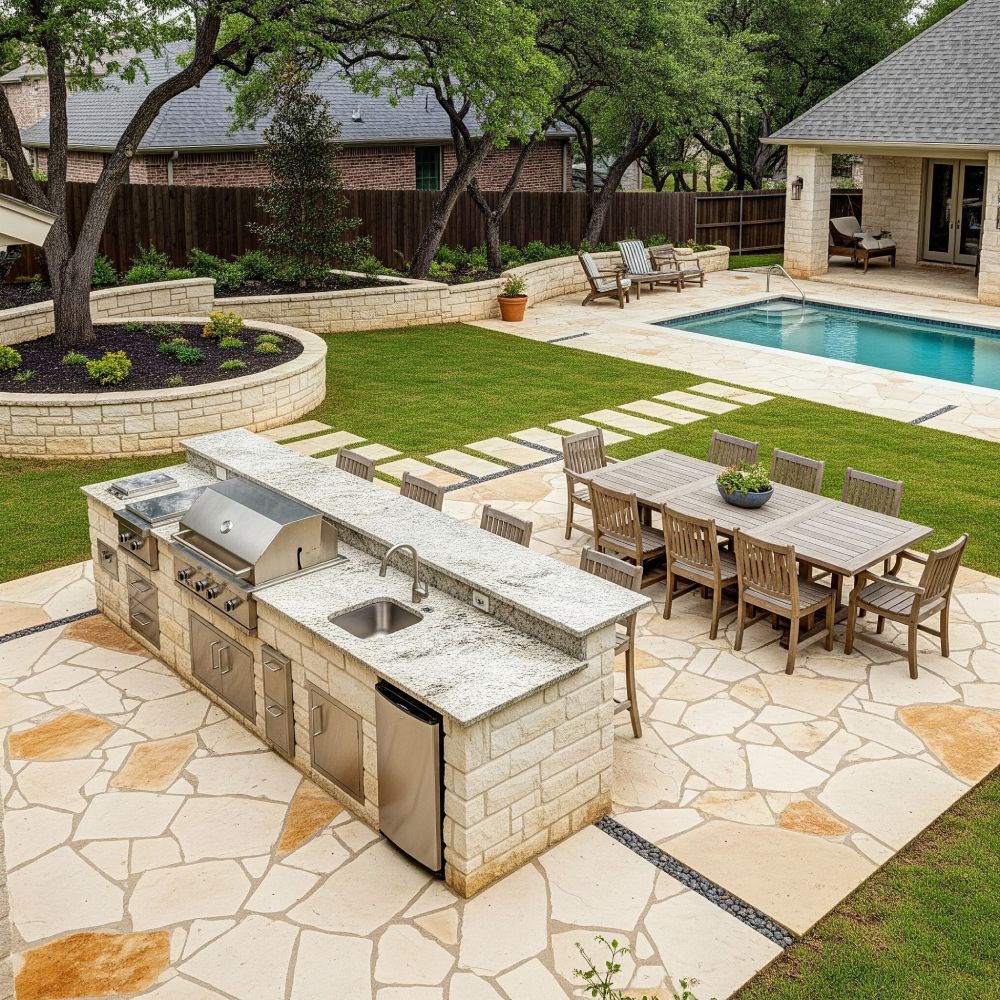
Why Hill Country Terrain Makes Retaining Wall Drainage So Critical
Many Austin properties sit on sloped lots carved out of limestone and clay. When it rains hard, water moves fast downhill and saturates the soil behind any wall in its path. That water pressure is what pushes most retaining walls out of plumb over time. We install drain lines and gravel backfill behind every wall specifically to relieve that pressure before it builds up.
- Clay soil that holds water and swells against the back of a wall, requiring gravel backfill and a perforated drain pipe to direct it away.
- Hilly lots throughout Austin, Westlake, Bee Cave, and Lakeway where slopes are steep enough to require terraced wall systems.
- Heavy spring rains that saturate soil quickly and test every drainage detail we put behind the wall.
- Footings poured below the active clay zone, so seasonal soil movement does not heave the base of a stone, block, or concrete wall.
- Permit considerations for taller walls in the City of Austin and surrounding jurisdictions that we walk through before construction begins.
- We build retaining walls for homeowners in Austin, Dripping Springs, Round Rock, Cedar Park, Georgetown, Leander, and the Hill Country.
Retaining Walls FAQs
Do I need a permit for a retaining wall in Austin?
Shorter garden walls usually do not need a permit, but taller walls or walls that hold back significant slopes often do. Rules vary by height and location. We help you understand what your project needs before we build.
How long do stone retaining walls last?
A properly built stone or block retaining wall with good drainage can last for decades. The key is a solid footing, the right backfill, and a drainage system that keeps water from building up behind the wall.
What is the best material for a retaining wall?
Native limestone, stacked stone, and segmental concrete blocks all work well in Central Texas. Stone offers a natural look that fits Hill Country homes, while block systems give a clean, uniform finish. We help you pick based on your slope, style, and budget.
Is a concrete retaining wall better than a stone one?
A poured or block concrete wall offers a clean, modern look and strong structural support, while a stone wall gives a more natural appearance. We help you choose based on the slope, the load, and the look you want.
How tall can a concrete retaining wall be?
We build short and tall walls, but taller walls need extra engineering and may require a permit. We assess your slope and let you know if a single wall or a terraced design is the better and safer option.