



A new driveway is one of the biggest flat surfaces on your property, and in Austin the ground under it matters as much as the surface on top. On the east side of the Austin area, the ground is often clay that swells when it is wet and shrinks when it dries. Many Hill Country lots to the west have thin soil over limestone. Either one can crack a slab or sink a paver if the base is built wrong.
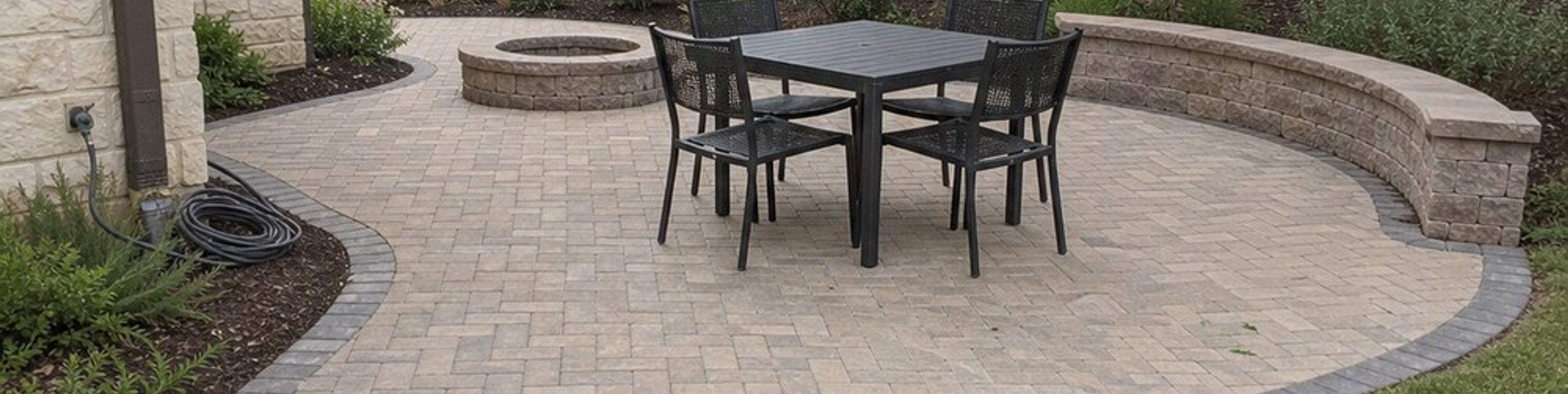
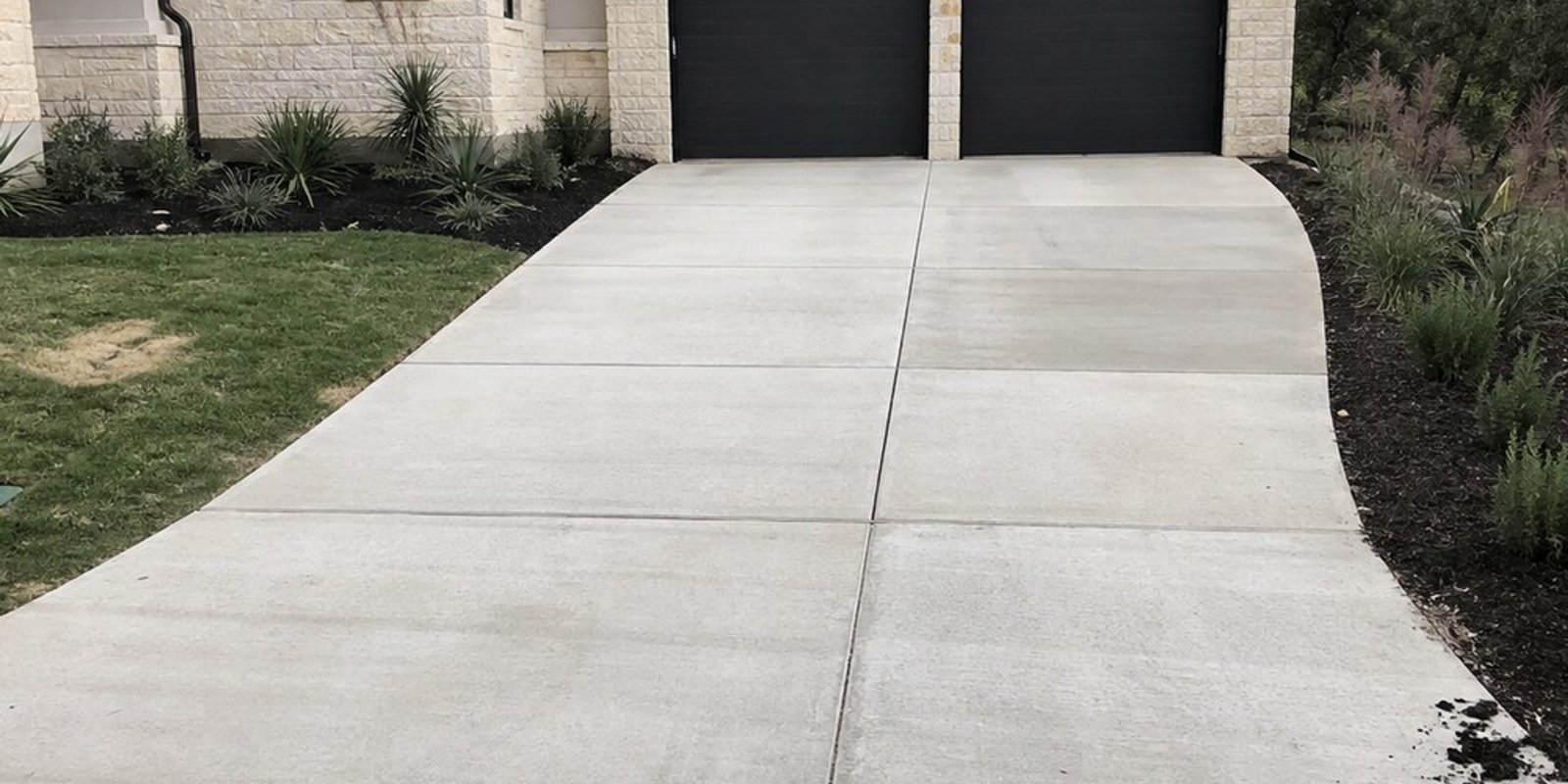
We build both kinds. Our concrete driveways are poured, reinforced slabs, and our paver driveways are interlocking units set over a compacted base. This guide compares what each one costs, how each handles Austin ground, which city rules apply, and what a fair quote should spell out.
How much does a concrete driveway cost in Austin compared with pavers?
Concrete usually costs less to install. Pavers usually cost more up front, but you can repair them one piece at a time. These are national published figures, not our quotes and not verified Austin prices:
- Concrete: Angi (updated April 2026) puts concrete driveways at $8 to $20 per square foot. Most projects run $2,700 to $14,500, including removal of the old concrete. Angi lists a 24-by-24-foot driveway at $4,600 to $8,600.
- Pavers: HomeGuide (updated January 2026) puts paver driveways at $10 to $30 per square foot installed, or $5,700 to $17,200 for an average two-car driveway. It uses 24 by 24 feet as a standard two-car size.
- Stamped concrete: Angi lists stamped finishes at $12 to $18 per square foot.
For the same two-car size, the published paver range starts above the concrete range and tops out at about twice as much. Your real number depends on what has to come out, what sits under it, and the finish you pick.
What makes one Austin driveway quote higher than another?
Two bids for the same driveway can be thousands of dollars apart. These line items usually explain the gap:
- Tearing out the old driveway. HomeGuide puts removal at $2 to $6 per square foot. Ask whether hauling off the debris is included.
- The base. The layers under the surface carry the load. Digging, base rock, and compaction take time and material, and digging into limestone takes more time and equipment than digging soil.
- Thickness and steel. Angi notes that 4 inches is the common thickness for a concrete driveway, with 6 inches as an upgrade for heavier vehicles. Steel reinforcement adds material and labor.
- The apron at the street. The section where the driveway meets the curb often sits in the public right-of-way, which brings its own permit. Our garage and entry aprons page covers that piece.
- Finish and pattern. Angi's finish table runs from $6 to $8 per square foot for plain concrete up to $18 to $20 for saw-cut or stained work. Paver prices change with the unit, pattern, and border.
- Drainage. If the new driveway has to move water away from the garage, regrading or a drain adds cost. We plan that as part of our land grading work.
Which holds up better on Austin clay and limestone: concrete or pavers?
Either one can last for decades if the base is built for the site. They just fail in different ways when it is not.
Clay on the east side
The USDA describes Houston Black clay, a Blackland Prairie soil whose official reference site is in Travis County, as having high shrink-swell potential. It cracks 1/2 to 4 inches wide during dry spells. When ground like that moves, a concrete slab can crack. The National Ready Mixed Concrete Association says cracks cannot be prevented entirely, but they can be controlled with well-placed joints, which it calls "pre-planned cracks." Those are the straight cut lines you see across a slab.
Pavers flex with the movement because each unit is separate. The trade-off, as HomeGuide notes, is that pavers can sink or crack over a poorly graded base. On clay, the base matters as much as the surface you choose.
Limestone in the Hill Country
West of Austin, many lots have thin soil over rock. The USDA describes Eckrant soils on the Edwards Plateau as having only 4 to 20 inches of soil over hard limestone. Rock is slow and costly to dig, and rain runs off it fast, so the driveway needs a clear plan for where water goes. Our French drain guide explains this east-west soil split and how water moves on each side.
Is stamped concrete a smart middle ground?
It can be. Stamped concrete presses a stone, slate, or brick pattern into a poured slab. Angi's stamped range of $12 to $18 per square foot sits inside the lower half of HomeGuide's paver range. Before you choose it, weigh the trade-offs:
- It is still one slab. It can crack like plain concrete, and a crack runs right through the pattern. We place control joints so normal clay movement is less likely to crack across the design.
- Repairs are harder to hide. Blending a patch into a pattern is harder than swapping out one paver.
- The color needs care. Strong Texas sun fades unprotected color, so plan to reseal every few years.
- Timing is tight. Stamping has to happen while the concrete is still workable, and Austin heat shortens that window. We plan and staff each pour around the temperature.
If you want the look of stone at a lower price, see our stamped and decorative concrete options.
Do pavers drain better, and do they help with Austin's impervious cover limits?
Permeable pavers have gaps filled with small stone, so rain can soak into the base instead of running off. That can cut down on puddles and runoff. Just don't count on them to get around Austin's impervious cover rules.
Section 25-8-63 of Austin's Land Development Code lists driveways as impervious cover. Porous pavement is excluded only when it is used for pedestrian walkways and multi-use trails outside the Edwards Aquifer Recharge Zone. So inside the City of Austin, a permeable paver driveway still counts toward the most impervious cover your lot is allowed to have.
That matters most if you want to widen a driveway or add a parking pad. Ask your builder to check how much impervious cover your lot already has before you settle on a size. Outside Austin city limits, check with your city or county.
Do you need a permit or HOA approval for a new driveway in Austin?
You may not need a building permit, but you may need other approvals. Inside Austin city limits:
- On your property: The City lists "a sidewalk, driveway, or concrete flatwork that is not located in the public right-of-way" as work exempt from a residential building permit. Exempt work still has to meet city codes, including the impervious cover rules above.
- At the street: Any work in the public right-of-way needs a right-of-way permit, and Driveway/Sidewalk is one of the City's permit types. If your new apron or curb cut reaches into that strip, plan for that permit and its review time.
- Your HOA: If you have an HOA, check whether it requires approval for driveway material, color, or width. Get any approval in writing before you sign a contract.
Other cities around Austin set their own rules, so check with your city or county.
Which driveway needs less upkeep, and how soon can you drive on it?
Neither one is maintenance-free. The difference is in what you do and how often:
- Concrete: HomeGuide suggests a yearly power wash and sealing every 1 to 3 years. You can fill a crack, but the patch usually shows.
- Pavers: Joint sand can wash out, and weeds can sprout in the joints. A stained or broken paver can be lifted out and replaced on its own.
Timing differs too. We tell homeowners they can usually walk on new concrete after a day or two, but they should wait about seven days before parking a car, and longer for heavy vehicles. HomeGuide notes that a paver driveway can be used right after it is installed.
How should you compare driveway quotes and choose a contractor in Austin?
Can you pour your own driveway? You can, but it is a big pour that has to be placed, finished, and jointed before it sets, and mistakes are permanent. Most homeowners are better served by comparing a few detailed bids. Ask each contractor to put these items in writing:
- Removal and hauling of the old driveway
- Base material, depth, and how it will be compacted
- For concrete: thickness, reinforcement, and control joint layout. The National Ready Mixed Concrete Association recommends joint spacing of no more than 24 to 36 times the slab thickness, or about 10 feet for a 4-inch slab.
- For pavers: unit thickness, laying pattern, and edging. The Concrete Masonry & Hardscapes Association's guide specification calls for units at least 2 3/8 inches (60 mm) thick for residential driveways, 3 1/8 inches (80 mm) for vehicular use, and edge restraints around the whole perimeter.
- Who pulls the right-of-way permit for the apron
- How water will drain off the driveway and away from the garage
- Repairs to lawn, beds, and sprinkler lines along the edges
- The timeline, payment schedule, and workmanship warranty
Ask to see driveways the contractor has built. A low bid that skips base prep or permits is not a real savings.
Ready to price a new driveway for your Austin home?
The right driveway depends on your soil, your slope, your budget, and the look you want. Because we build both, we can price plain concrete, stamped concrete, and pavers side by side for the same layout, and show you the options in a 3D rendering before anything is built. We work with homeowners across Austin and nearby Hill Country communities. Contact 512 Luxury Landscape Design to schedule a design consultation and get an estimate for your property.