




Rain in Austin tends to arrive all at once. The National Weather Service places Austin in Flash Flood Alley, and the LCRA says the region is prone to flash floods because of steep terrain, shallow soil, and unusually high rainfall rates. When a storm like that hits a yard that is flat, sloped the wrong way, or sitting on heavy clay, the water has nowhere to go. It stands in low spots for days, runs across the patio, or pools against the slab.
A French drain is the fix most people look up first. Sometimes it is right, and sometimes regrading or a downspout line does the job for less. We grade yards and build drainage as part of our land grading service, adding swales, drains, or channels where water needs help moving. This guide covers what French drains cost, when one makes sense, how Austin soil changes the job, where the water is allowed to go, and what a good quote should include.
How much does a French drain cost in Austin?
Published national guides put most professional yard French drains in the low to mid thousands of dollars. These are national figures, not our quotes and not verified Austin prices:
- Angi (updated September 2026) puts yard drainage at $2,147 to $7,173, with a $4,633 average. It lists French drains at $20 to $50 per linear foot, or about $2,000 to $7,000 total.
- LawnStarter (updated October 2026) lists outdoor French drains at $10 to $65 per linear foot, or $1,000 to $6,500 for a 100-foot run.
Indoor basement drains cost more, but that is a different job. On an Austin lot, a few things move the price:
- Length and depth. Most quotes are priced by the linear foot.
- What you dig through. Limestone takes heavier equipment and more time than soil. Wet clay is slow, messy work, and the extra dirt often has to be hauled off.
- The outlet. Letting water out in a lower part of your own yard costs less than running a line to the street.
- Putting the yard back. A trench cuts through lawn, beds, and often sprinkler lines. Ask whether new sod and sprinkler repairs are in the price.
We price every yard on its own after we see where the water comes from and where it can go, so we do not post flat numbers.
Is a French drain the right fix, or do you need regrading?
A French drain is a trench lined with filter fabric and filled with gravel around a perforated pipe. It collects water from soggy ground and carries it underground to a lower outlet. It is one tool, not the only one. Conservation guidance for homeowners starts with the basics: ground that slopes away from the house and downspouts that send water away from it. Match the fix to the problem:
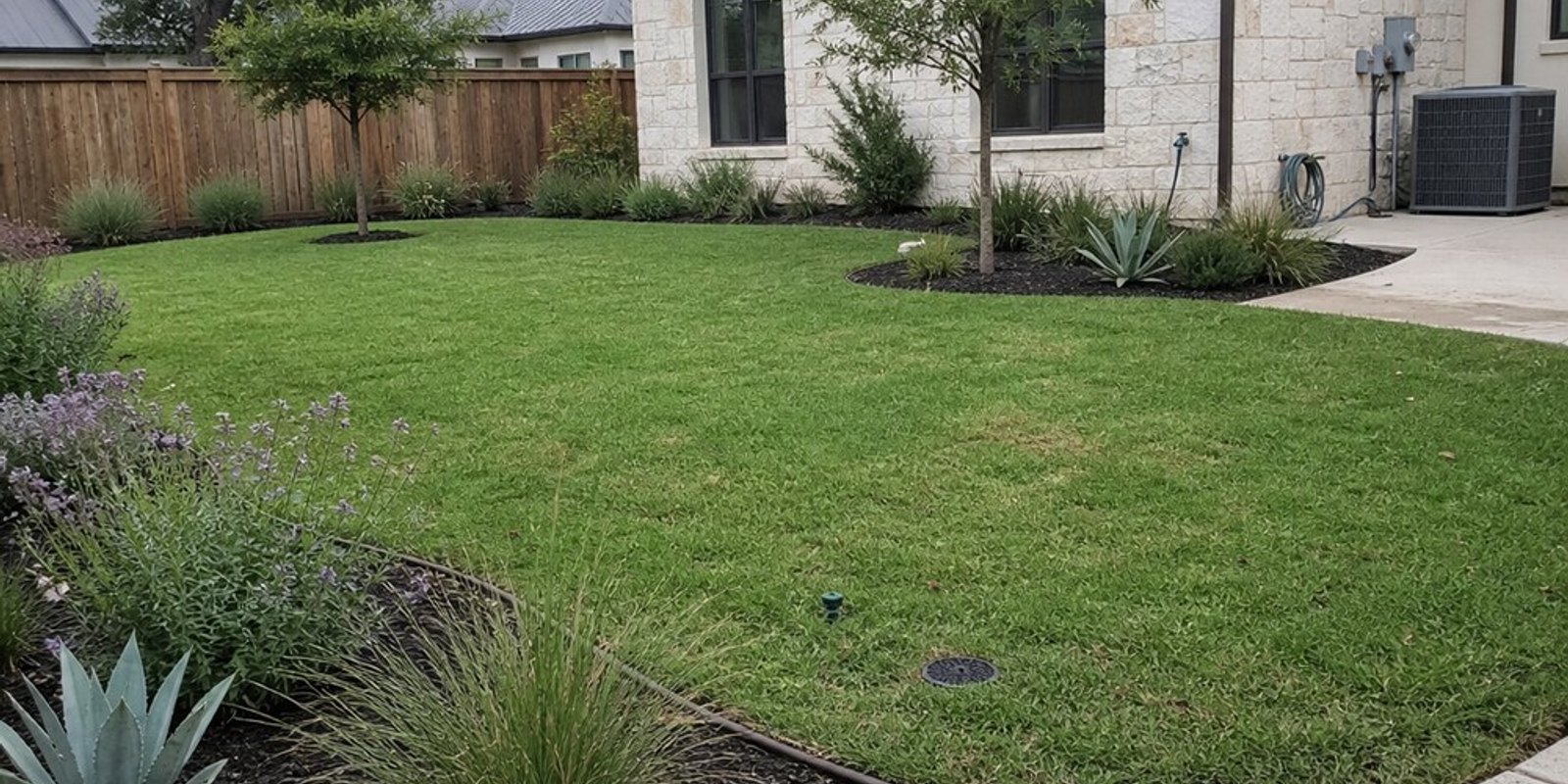
- Water flows toward the house from a slope or the lot next door. Regrade or shape a swale, a wide, shallow ditch, to steer it around.
- Gutters dump right next to the slab. Run downspouts through solid pipe to an outlet away from the house.
- A low spot stays soggy for days after rain. A French drain, often paired with regrading.
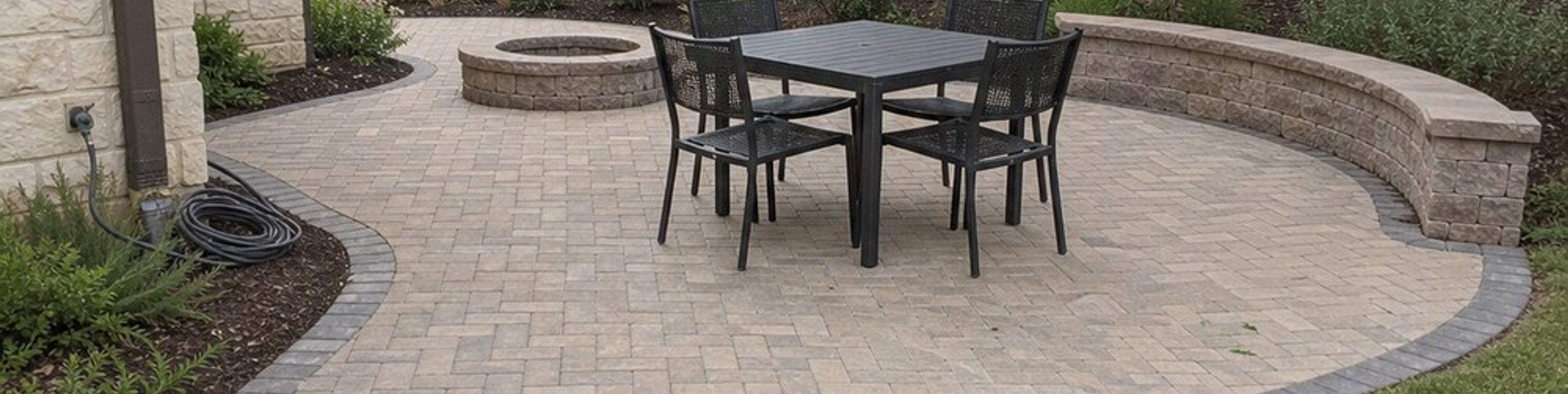
- Water collects on a patio or at the bottom of a driveway. A channel drain set into the paving.
- Water seeps out of a hillside behind a wall. Drain pipe and gravel behind the wall. We put drain lines and gravel backfill behind every retaining wall we build.
Often the best answer is a mix. On a grading job, we study how water moves across the property during a heavy rain, then map the low spots and the path water should take to leave the yard. If you would rather slow rain down and let it soak in, see the rain garden ideas in our xeriscaping guide.
Do French drains work in Austin's clay and limestone soil?
Yes, but the two kinds of ground call for different designs. The Balcones Escarpment runs north to south through Austin. The University of Texas Bureau of Economic Geology notes that soils east of it are deep, while soils to the west are thin and rocky.
East side: heavy clay
Houston Black clay is a classic Blackland Prairie soil, and its official reference site is near Manor in Travis County. The USDA soil description says water moves through it very slowly, that it shrinks and swells a lot, and that it cracks 1/2 to 4 inches wide when dry. In clay like this, water soaks away from the pipe very slowly. The drain needs a true outlet, plus filter fabric to keep fine clay out of the gravel.
West side: thin soil over limestone
In the Hill Country around Lakeway and Bee Cave, soil is often thin and rocky over limestone. With little soil to soak it up, rain runs off these slopes fast, sometimes straight toward the house. A drain set across the slope above the house can catch that water before it reaches the slab. Digging into rock also adds cost on these lots.
North of Austin, the escarpment runs right through Round Rock and Georgetown, with blackland clay to the east. Two homes a few miles apart can need very different drainage plans.
How close to the house should a French drain go?
Start with the grade. The 2024 International Residential Code, in effect in the City of Austin since July 2025, says the ground should drop at least 6 inches within the first 10 feet from the foundation. Where a wall, slope, or lot line makes that impossible, the code calls for drains or swales instead. If the ground slopes toward your slab, a French drain alone is a patch, not a fix.
This matters more on clay. Texas regulators call expansive soil a very common cause of foundation problems. Wet clay swells and lifts a building, and dry clay shrinks and lets it settle. Good surface drainage helps keep that moisture steady, so the goal is to move water away from the slab instead of letting it pool there.
Where the trench goes depends on where the water comes from. A run across the slope uphill of the house catches water before it arrives. A run beside the house collects water close to the slab. Ask any contractor how close the trench will run to your slab and footing, and why.
Watch the trees, too. In the City of Austin, trees under 19 inches across are not regulated on residential lots. For larger protected trees, digging in the critical root zone can require a Tree Ordinance Review Application. Plan the route around big oaks before anyone digs.
Where can the water go, and do you need a permit?
Every French drain needs an outlet lower than the problem spot. Common choices are a lower part of your own yard, a pop-up emitter in the lawn, or a line to the street.
- Not onto your neighbor. Texas Water Code Section 11.086 says no one may divert the natural flow of surface water in a way that damages someone else's property. The owner who is harmed can sue for damages.
- The street. In the City of Austin, all work in the public right-of-way needs a permit, including curb work, and the contractor needs a right-of-way license. Other cities set their own rules, so check with yours.
- Your HOA. Many HOAs review changes to grading and anything visible from the street. Ask before work starts.
- Call 811 first. Texas811 says state law requires you or your contractor to call at least two business days before digging, even in your own backyard. The service is free, and if you hire a contractor, the call is their job.
What makes a French drain fail?
Most problems trace back to a few mistakes:
- No filter fabric. Fine soil washes in and clogs the gravel and pipe. This matters most in clay.
- Not enough fall. Extension guidance calls for a steady slope of about 0.5% to 1%, which is 6 to 12 inches of drop over 100 feet. A dip in the line holds water and silt.
- No real outlet. If the water has nowhere lower to go, the trench just fills up.
- Clay used as backfill. A French drain moves water through gravel. Packing the trench with the clay that came out of it slows the water down.
Ask for a cleanout, an access point that lets someone flush the line with a hose. After a big storm, walk out and check that water is actually leaving the outlet.
Should you DIY a French drain or hire a pro?
A short, shallow run in soft soil with an easy outlet is a fair weekend project. Hire help when:
- The trench crosses rock or runs close to the slab.
- The fix also needs regrading, a retaining wall, or a channel drain in a patio.
- The outlet goes to the street or near a property line.
- Sprinkler lines, utilities, or large tree roots sit in the path.
The hard part is not the digging. It is reading where the water comes from and holding a steady slope over a long run.
What should a French drain quote include?
A good quote spells out:
- Where the water comes from and why this fix solves it
- Linear feet, trench depth, pipe size and type, gravel, and fabric
- The slope and the outlet type and location
- Cleanouts, and solid pipe for any downspout connections
- Digging, haul-off, and how rock is handled if they hit it
- The 811 call and any permits
- Putting the yard back: sod, beds, and sprinkler repairs
- A written warranty
Then ask a few questions. Where will the water go? What happens if you hit rock? Do I need regrading too? How will you protect my trees? A contractor who can answer those clearly has looked at your yard, not just measured it.
Because one in-house team handles grading, walls, sod, and irrigation, we can fix the cause and put the yard back in one job.
Ready to fix the drainage in your Austin yard?
Standing water will not fix itself, and the right answer depends on your soil, your slope, and where the water can legally go. Contact 512 Luxury Landscape Design for a design consultation. We will walk the yard with you, look at where the water comes from, and tell you whether you need a French drain, regrading, or both.